Why E-Commerce Security Cannot Be an Afterthought
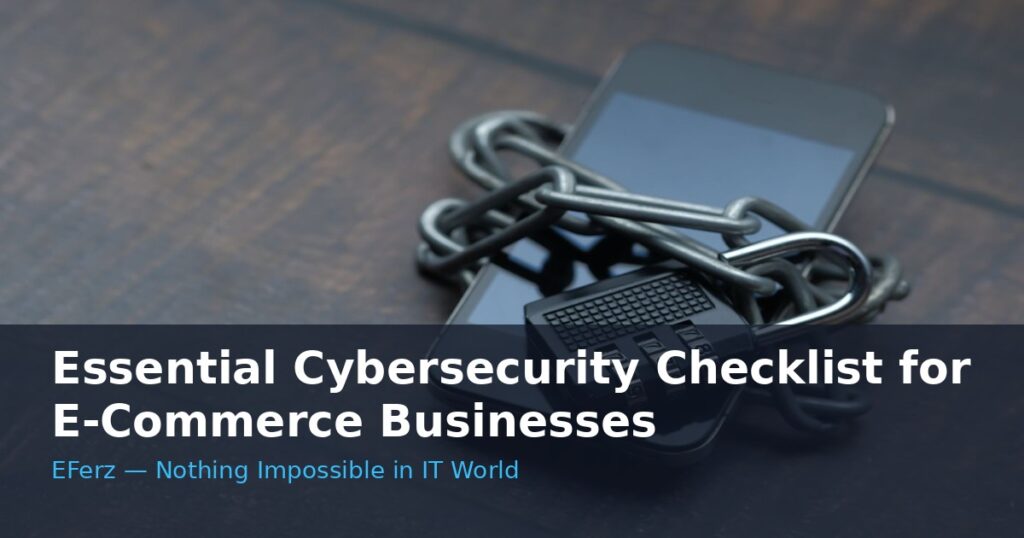
As online shopping continues to explode across the USA, Saudi Arabia, and global markets, digital storefronts have become primary targets for cybercriminals. From ransomware attacks to customer data breaches, a single vulnerability can disrupt your operations, harm your brand reputation, and result in severe financial penalties. Maintaining a robust cybersecurity posture is no longer an optional luxury—it is a fundamental operational necessity for any growing digital enterprise.
1. Enforce Multi-Factor Authentication (MFA) Across All Systems
Credential compromise remains one of the most common entry points for unauthorized access. Enforcing Multi-Factor Authentication (MFA) across all administrative dashboards, content management systems, and employee databases adds a critical layer of defense. Even if an attacker obtains a password through phishing or brute-force tactics, MFA prevents them from breaching your systems without secondary verification.
- Require MFA for all staff access to website backends and payment portals.
- Implement time-based one-time password (TOTP) apps rather than SMS-based verification where possible.
- Enforce strong password policies alongside regular credential updates.
2. Maintain Strict PCI-DSS Compliance and SSL Encryption
Protecting sensitive customer payment details is paramount. Transport Layer Security (TLS/SSL) certificates encrypt data in transit between your customer’s browser and your server, ensuring that credit card numbers and personal details cannot be intercepted. Furthermore, adhering to the Payment Card Industry Data Security Standard (PCI-DSS) ensures your payment processing infrastructure meets global safety standards.
3. Deploy a Web Application Firewall (WAF) and DDoS Protection
A Web Application Firewall (WAF) acts as a protective shield between your e-commerce platform and incoming web traffic. It filters out malicious HTTP requests, preventing common threat vectors such as SQL injections, Cross-Site Scripting (XSS), and zero-day exploits. Pair your WAF with cloud-based Distributed Denial of Service (DDoS) mitigation to ensure your online store remains online even during heavy bot attacks.
4. Establish Automated Offsite Backups and Disaster Recovery
Cyber incidents can happen despite the best preventive measures. Having automated, real-time or daily offsite backups ensures you can restore your website to a clean state quickly without paying ransomware demands or losing critical order history.
- Store backups in isolated, encrypted cloud environments.
- Test your restoration procedures quarterly to confirm data integrity.
- Maintain clear documentation for emergency incident response.
5. Schedule Regular Vulnerability Scans and Code Audits
E-commerce plugins, third-party extensions, and custom code bases frequently develop security flaws over time. Routinely scanning your web infrastructure for outdated software and unpatched vulnerabilities helps you remediate threats before exploit scripts find them.
How EFerz Protects Your Online Store
At EFerz, we help businesses build, scale, and protect their digital assets with enterprise-grade web development and cybersecurity solutions tailored for markets in the US and Saudi Arabia. Our team performs deep security audits, implements custom firewalls, and secures your e-commerce ecosystem so you can focus on scaling your business with peace of mind. Remember, in the IT world, nothing is impossible—including bulletproof digital security.